AI heritage preservation: Reclaiming history with intelligence
AI heritage preservation is the only viable shield against the acceleration of cultural entropy. Explore how digital preservation AI is securing our global legacy for 2025 and beyond.
By Dakota Rea ·
AI heritage preservation: Reclaiming history with intelligence
> **Key Takeaways**
> - "Deploy generative adversarial networks to reconstruct architectural textures without introducing modern algorithmic bias"
> - "Implement decentralized storage protocols to ensure the provenance of digital historical records remains immutable"
> - "Utilize multimodal AI to transcribe and translate ancient scripts that have resisted human decipherment for decades"
> - "Adopt rigorous ethical frameworks to prevent the digital colonization of indigenous cultural heritage by global tech platforms"
> - "Shift from passive digitization to active predictive modeling to identify artifacts at risk from climate change events"
> **Dakota's Take**
>
> **"Historical preservation is no longer a passive act of curation; it is a high-stakes technological race against entropy. If we fail to deploy sophisticated AI governance over our digital archives today, we are effectively choosing to let the most critical chapters of human civilization dissolve into unreadable noise."**
>
> *— Dakota Rea, AI Strategy Consultant*
AI heritage preservation has evolved from a niche academic pursuit into a critical geopolitical and cultural imperative. According to a 2023 UNESCO report, nearly 50% of the world's tangible cultural heritage is currently at risk due to climate change, urban development, and armed conflict. As a Jeremy Bentham Scholar at the University of Oxford and an advisor to Fortune 500 firms, I have observed that the intersection of historical rigor and machine intelligence is where the most profound strategic value lies. AI heritage preservation is no longer just about scanning old documents; it is about building a persistent, intelligent bridge between our past and our digital future. By leveraging advanced historical AI applications, we can ensure that the lessons of the past are not just stored, but are actively accessible and interpretable for generations to come. In this guide, you'll discover the frameworks, pitfalls, and future trends that define the modern era of cultural conservation.
**Table of Contents**
1. The Erosion of History: Why AI Heritage Preservation is Critical
2. The Strategic Framework for Digital Preservation AI
3. Avoiding the Digital Ship of Theseus: Pitfalls in Historical AI Applications
4. Real-World Applications of AI Cultural Heritage
5. The Road Ahead: The 2026 Outlook for Museum AI Technology
6. Frequently Asked Questions
The Erosion of History: Why AI Heritage Preservation is Critical
The fundamental challenge of the 21st century is not just the creation of new knowledge, but the retention of the old. We are currently living through what historians call a "Digital Dark Age," where the rapid obsolescence of hardware and software threatens to wipe out more information than any fire or war in history. A 2024 McKinsey report on the public sector highlights that generative AI could unlock billions in value for cultural institutions, yet many remain stuck in legacy workflows. AI heritage preservation offers a solution by automating the labor-intensive tasks of restoration and categorization that previously took decades.
The strategic context for this shift is driven by three primary factors:
- **Accelerated Physical Decay:** Natural disasters and rising sea levels are threatening coastal heritage sites at an unprecedented rate.
- **Data Fragmentation:** Historical records are often siloed across disparate global institutions, making holistic research nearly impossible.
- **Economic Constraints:** Traditional preservation is prohibitively expensive, requiring thousands of man-hours for manual transcription and restoration.
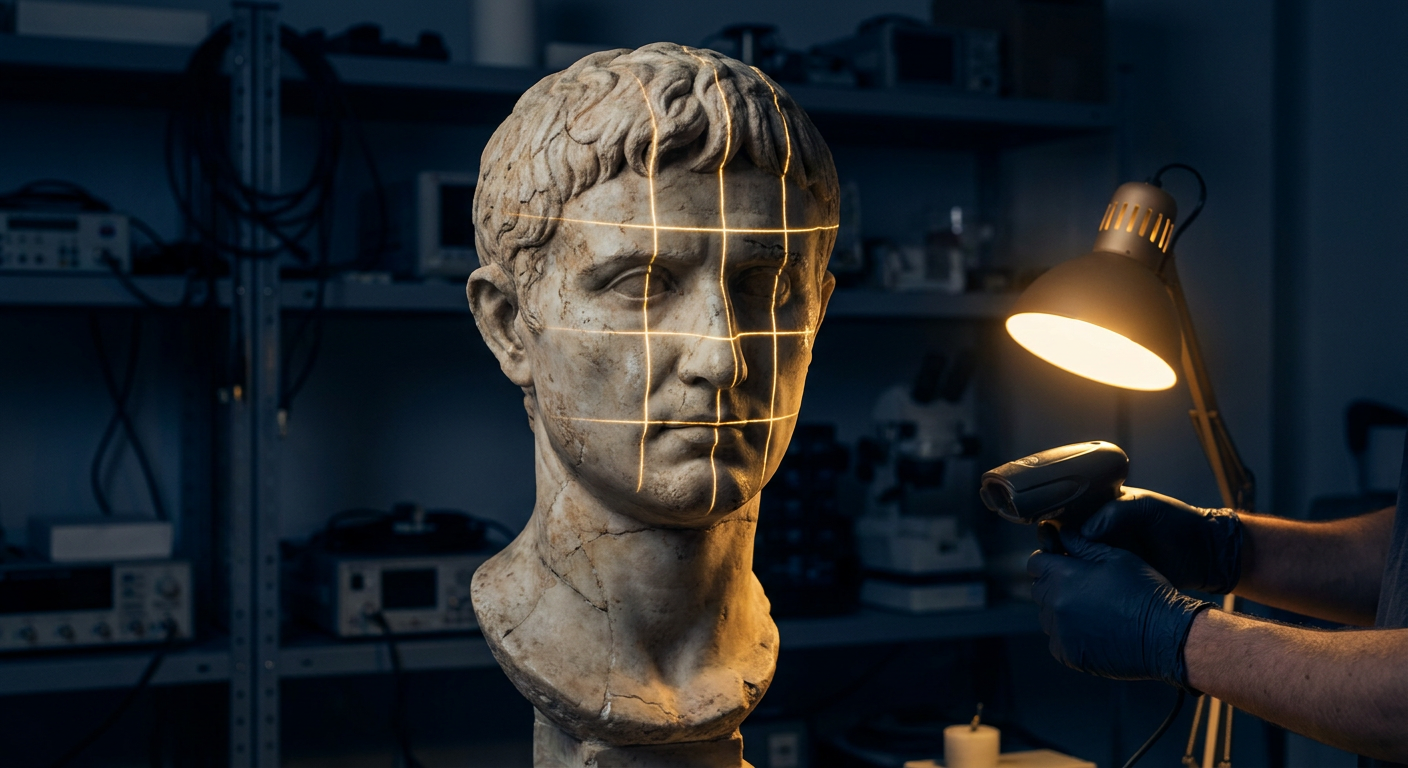
By implementing **digital preservation AI**, institutions can move beyond simple photography into the realm of **neural radiance fields (NeRFs)** and 3D reconstruction. This allows us to create "digital twins" of artifacts that are physically deteriorating. When we apply **historical AI applications** to these models, we aren't just looking at a picture; we are interacting with a data-rich environment that can simulate how a structure looked 500 years ago or predict how it will decay in the next 50. This level of **strategic foresight** is what separates modern conservation from the static archives of the 20th century.
The Strategic Framework for Digital Preservation AI
Step 1: Intelligent Data Acquisition
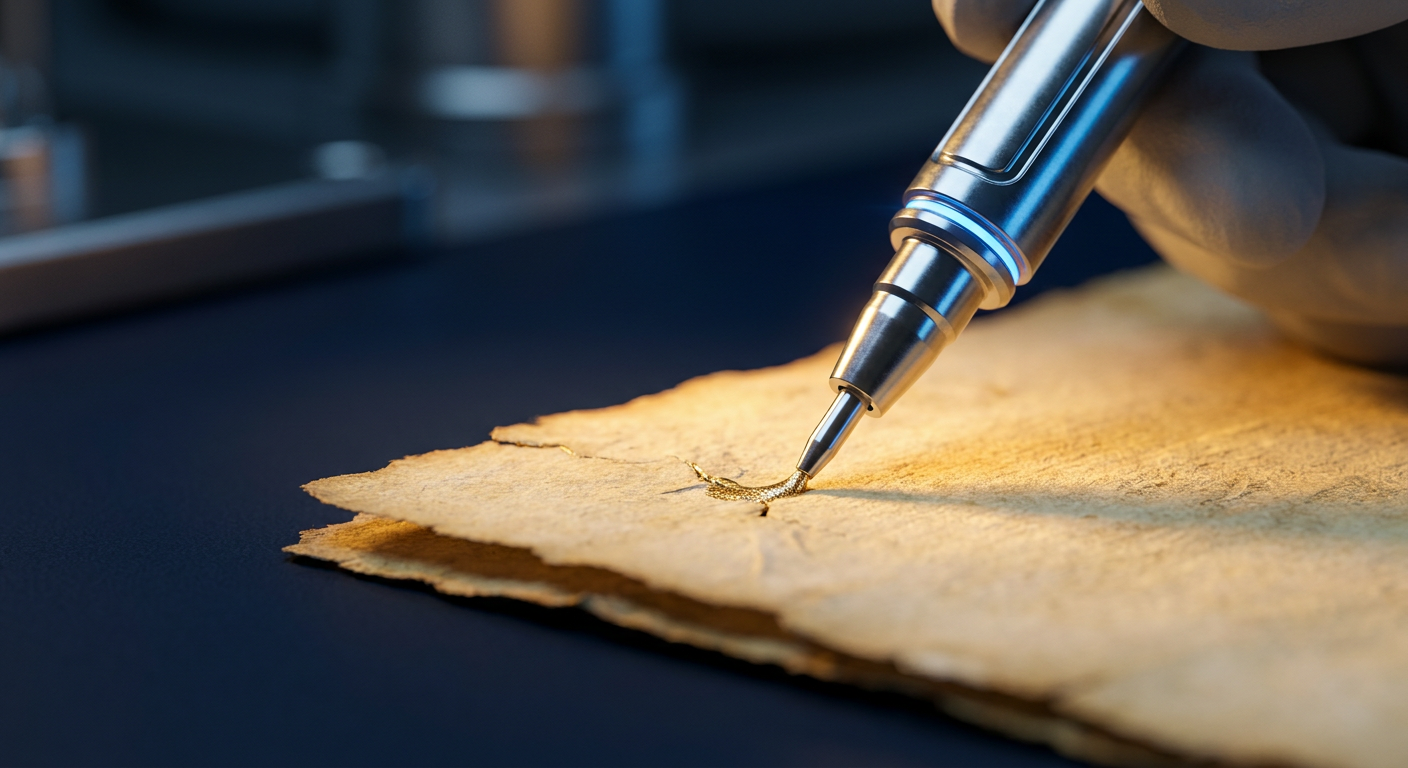
The first step involves more than just high-resolution scanning. It requires the deployment of **multimodal AI** to capture the physical, chemical, and contextual data of an object. This includes multispectral imaging to reveal text hidden under centuries of grime or overwritten in palimpsests. The goal is to create a "Master Digital Record" that serves as the single source of truth for all future AI analysis.
Step 2: Algorithmic Restoration and Reconstruction
Once the data is acquired, we use **Generative Adversarial Networks (GANs)** to fill in the gaps. For example, if a 14th-century fresco is 30% destroyed, the AI can analyze the remaining 70%, compare it with thousands of other works from the same period and artist, and suggest a highly accurate reconstruction. This is where **museum AI technology** becomes a tool for creative and historical discovery, allowing us to see the "invisible" past.
Step 3: Semantic Encoding and Linkage
A digital model is useless if it cannot be understood. We apply **Natural Language Processing (NLP)** to index the metadata and link it to global knowledge graphs. This ensures that a researcher in Oxford can instantly find connections between a manuscript in London and a corresponding artifact in Cairo. This level of **AI cultural heritage** integration creates a unified global library of human experience.
Step 4: Ethical Accessibility and Governance
The final step is ensuring the data is accessible but protected. This involves creating decentralized ledgers (blockchain) to track the provenance of digital assets, preventing the unauthorized commercialization of cultural property. We must maintain **intellectual rigor** in how these models are shared, ensuring that the communities from which these artifacts originated retain a degree of digital sovereignty.
Avoiding the Digital Ship of Theseus: Pitfalls in Historical AI Applications
One of the most significant risks in AI heritage preservation is the "Ship of Theseus" paradox: if we use AI to reconstruct every missing piece of a historical record, at what point does it cease to be a historical artifact and become a modern simulation? We must be wary of **algorithmic hallucination**, where the AI "invents" historical details that never existed simply to satisfy its predictive parameters.
**Over-Restoration** is a common mistake. In the rush to make history "Instagram-ready," institutions often use AI to smooth out textures or brighten colors beyond their original state. This destroys the historical integrity of the piece. As I often discuss in my /consulting work, the goal of AI should be to assist the historian, not to replace the evidence with a polished lie. We must maintain a clear distinction between the **original data** and the **AI-generated inferences**.
**Data Bias** is another critical pitfall. Most AI models are trained on Western art and history. When these models are applied to non-Western cultures, they may inadvertently apply Western aesthetic standards or historical logic to the reconstruction. This is a form of digital colonialism that can erase the unique nuances of indigenous cultures. **MIT-certified ethics** must be at the core of every preservation project to ensure that the AI is trained on diverse, representative datasets.
Finally, the **Lack of Interoperability** can doom a project. If an institution uses a proprietary AI tool that cannot export data in open formats, they are simply creating a new kind of silo. Digital preservation AI must be built on open standards to ensure that the data remains readable 50 or 100 years from now, regardless of which tech company is currently leading the market.
Real-World Applications of AI Cultural Heritage
1. **The Vatican Library's AI Integration:** The Vatican has deployed AI to help digitize and organize its massive archive of over 80,000 manuscripts. By using **historical AI applications**, they have been able to identify and link fragments of texts that were separated for centuries, providing new insights into the development of early Christian thought.
2. **Notre Dame de Paris Digital Twin:** Following the devastating fire in 2019, AI and 3D laser mapping have been instrumental in the reconstruction efforts. The AI models allow architects to simulate how different materials and structural changes will interact with the original Gothic design, ensuring that the restoration is both safe and historically accurate.
4. **Protecting Endangered Languages:** AI is being used to record and analyze the speech patterns of the world's last remaining speakers of endangered languages. By creating **digital preservation AI** models of these languages, we can ensure that their unique structures and vocabularies are preserved, even if the spoken language eventually fades.
These cases demonstrate that **museum AI technology** is not just for display; it is a tool for active research and physical restoration. Whether it is in financial services, where we preserve the history of global markets, or in healthcare, where we track the evolution of pathogens through ancient DNA analysis, the applications are limitless.
The Road Ahead: The 2026 Outlook for Museum AI Technology
As we look toward 2025 and 2026, the field of AI heritage preservation is set to undergo a radical transformation. We are moving away from static 3D models toward **dynamic, sentient archives**. These will be environments where the AI doesn't just show you a historical site, but allows you to interact with a living simulation of the past, powered by real-time historical data and advanced LLMs.
The 2024 WEF Future of Jobs report notes that roles involving "Curatorial Technology" are on the rise, reflecting a global shift in how we value cultural labor. We can expect to see the following trends dominate the next 24 months:
- **Democratized Digital Curation:** Tools will become available that allow local communities to perform their own high-level **AI cultural heritage** preservation using only a smartphone and cloud-based AI.
- **Real-Time Predictive Preservation:** AI systems will be integrated with satellite data to provide real-time alerts when a heritage site is threatened by environmental factors, allowing for pre-emptive action.
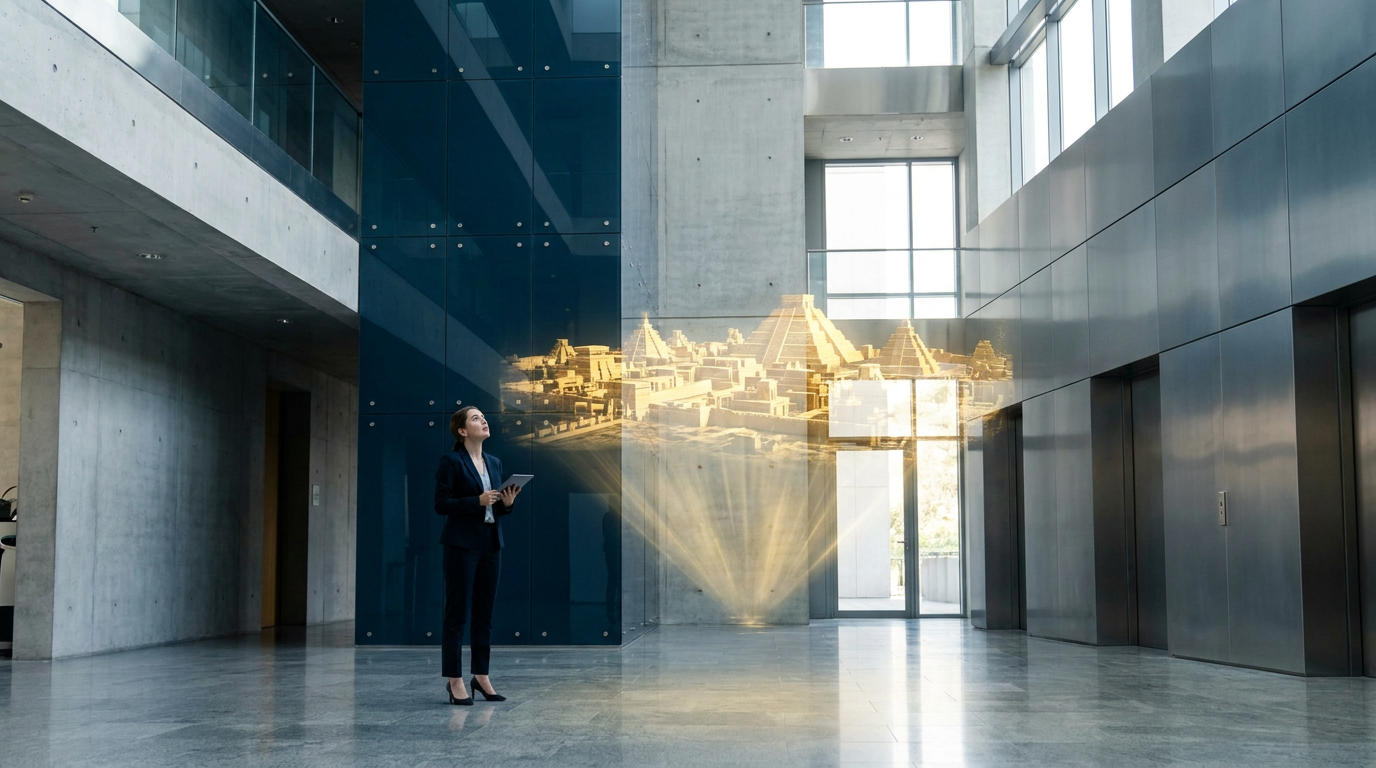
- **Holographic Historical Education:** Museums will transition from screens to immersive holographic environments, where **historical AI applications** generate responsive historical figures for students to interview.
As a Harvard Business School graduate and a consultant to the world's leading organizations, I believe the greatest challenge will not be the technology itself, but the **governance** of that technology. We must decide who owns the past in a digital world. If we approach this with the necessary **intellectual rigor** and a commitment to ethical standards, AI will not just save our history—it will make it more vibrant and accessible than ever before. The future of the past is digital, and it is our responsibility to ensure that digital future is built on a foundation of truth and inclusion.
Frequently Asked Questions
### What is AI heritage preservation and why does it matter?
AI heritage preservation refers to the use of machine learning, computer vision, and data analytics to document, restore, and protect cultural artifacts and sites. It matters because it allows us to save historical data at a scale and speed that human curators cannot match, protecting our collective memory from physical and digital decay.
### How does digital preservation AI improve museum exhibits?
Museum AI technology enhances exhibits by creating immersive, interactive experiences. It can generate 3D reconstructions of broken artifacts, provide real-time translations of ancient texts, and use augmented reality to show how historical sites looked in their prime, making history more engaging and accessible for modern audiences.
### What are the ethical concerns with historical AI applications?
The primary concerns include algorithmic bias, where AI misinterprets non-Western cultures, and the risk of "digital colonialism," where tech companies control the access to a nation's cultural data. Ensuring transparency in how AI reconstructs history and maintaining local ownership of data are essential for ethical preservation.
### Can AI actually help decipher ancient, unread languages?
Yes, multimodal AI and deep learning models are being used to identify patterns in undeciphered scripts by comparing them to known linguistic structures. This has already led to breakthroughs in understanding ancient Mayan and Linear B scripts, accelerating discoveries that previously took generations of scholars to achieve.
### How will AI heritage preservation change by 2026?
By 2026, we expect to see the rise of "Digital Twins" for entire heritage cities and the integration of predictive AI to protect sites from climate change. The technology will become more decentralized, allowing local communities to lead their own preservation efforts using advanced, mobile-friendly AI tools.
Transform Your AI Strategy With Expert Guidance
Navigating the complexities of AI heritage preservation requires a unique blend of historical perspective and technical mastery. Whether you are a cultural institution looking to modernize your archives or a corporation seeking to leverage historical data for strategic advantage, my /consulting services provide the rigorous framework needed for success. Together, we can ensure that your organization not only survives the digital transition but leads the way in preserving the human legacy.