Scale GenAI proof of concept to production: The Strategic Guide
Move beyond innovation theater. Discover how to scale GenAI proof of concept to production using an enterprise-grade framework designed for Fortune 500 resilience.
By Dakota Rea ·

Scale GenAI proof of concept to production: The Strategic Guide
> **Key Takeaways**
> - "Production readiness requires a transition from probabilistic experimentation to deterministic reliability through rigorous LLMOps."
> - "Data governance is not a secondary concern but the primary prerequisite for any scalable generative AI architecture."
> - "Enterprises must solve for the 'Cold Start' problem by aligning model capabilities with high-density internal data sources."
> - "Cost optimization at scale requires a multi-model strategy to avoid the prohibitive expenses of over-parameterized systems."
> - "Organizational resilience is built by integrating human-in-the-loop oversight into the automated reasoning chain."
> **Dakota's Take**
>
> **"Most enterprises are currently trapped in a cycle of 'innovation theater,' where endless pilots serve as a substitute for real strategic transformation. True competitive advantage is not found in the ability to build a chatbot, but in the architectural discipline required to weave generative intelligence into the very fabric of the corporate nervous system."**
>
> *— Dakota Rea, AI Strategy Consultant*
According to a 2024 report by the Boston Consulting Group (BCG), while 85% of executives believe GenAI will transform their industry, only 10% have successfully moved beyond the prototype stage. To **scale GenAI proof of concept to production** requires more than just technical aptitude; it demands a total reimagining of the enterprise operating model. As a Harvard Business School graduate who has advised Fortune 500 boards on AI strategy, I have witnessed firsthand the chasm between a successful demo and a resilient production system. The path to value is littered with the remains of "toy" applications that failed to survive the rigors of real-world data, security requirements, and user variability. In this guide, you'll discover the strategic framework necessary to bridge that gap, move past the limitations of an initial **AI pilot program**, and secure a lasting competitive advantage through systematic **AI production deployment**.
**Table of Contents**
1. The Strategic Context: Beyond Pilot Purgatory
2. The Five-Pillar Framework for Scaling
3. Critical Pitfalls in the Scaling Journey
4. Real-World Applications and Sector Insights
5. The 2026 Horizon: Future-Proofing Your AI
6. Frequently Asked Questions
The Strategic Context: Beyond Pilot Purgatory
The current state of enterprise AI is characterized by a phenomenon I call "Pilot Purgatory." Organizations are launching hundreds of proof-of-concepts, yet very few ever reach the stage of an **enterprise AI rollout**. Gartner (2024) predicts that at least 30% of GenAI projects will be abandoned after the POC stage due to poor data quality, inadequate risk controls, or escalating costs. The fundamental problem is that a POC is designed to prove that something *can* work, whereas a production system must ensure that it *always* works, reliably and safely, at scale.
To **scale GenAI proof of concept to production**, leaders must acknowledge that the technical requirements for a production-grade application are exponentially higher than those of a prototype. In a prototype, a 5% hallucination rate might be acceptable; in a production environment handling customer financial data, it is a catastrophic liability. The transition requires a shift from a "hacker" mindset to an "engineering" mindset, where every component of the AI stack is scrutinized for performance, security, and cost-efficiency.
Common barriers to scaling include:
- **Technical Debt:** Quick-and-dirty code written for a POC that cannot handle high concurrency.
- **Data Fragmentation:** Siloed data that prevents the model from accessing the context it needs.
- **Latent Risks:** Security vulnerabilities that only become apparent when the system is exposed to external users.
- **Opaque ROI:** A failure to define what success looks like in financial terms before the scaling begins.
By addressing these foundational issues early, organizations can move from isolated experiments to a cohesive **GenAI scaling strategy** that delivers measurable business value across the entire enterprise.
The Five-Pillar Framework for Scaling
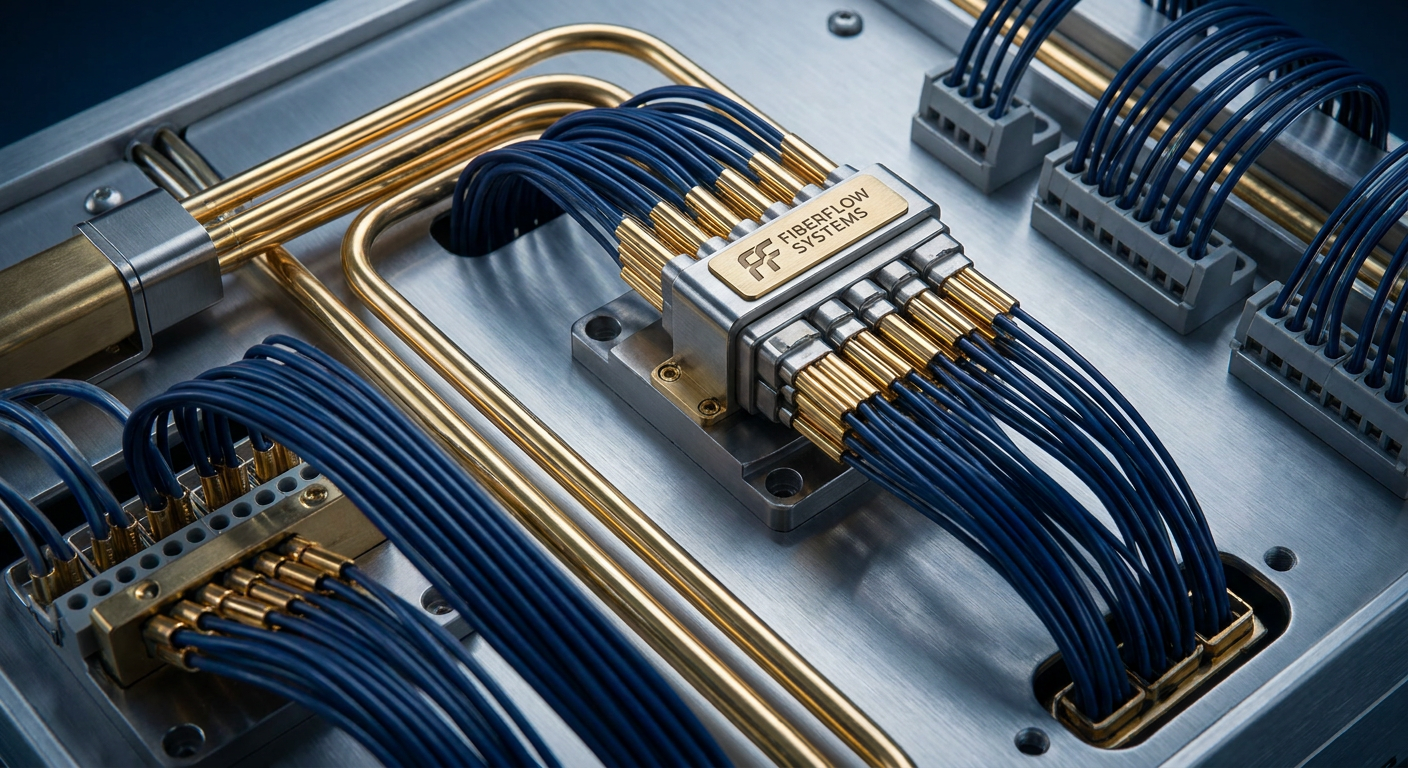
Moving from an **AI POC to production** requires a structured approach. I have developed a five-pillar framework that I use with my consulting clients to ensure their AI initiatives are both robust and scalable.
### Step 1: Establish the Data Foundation
Generative AI is only as good as the data it consumes. For a production system, you need more than just a clean dataset; you need a dynamic data pipeline. This involves implementing Retrieval-Augmented Generation (RAG) architectures that can pull real-time, verified information from internal databases. This reduces hallucinations and ensures the model remains grounded in corporate reality. Data governance must be baked into the pipeline from day one, ensuring that sensitive information is redacted before it ever reaches the LLM.
### Step 2: Implement LLMOps and Infrastructure
Production systems require a dedicated operational layer known as LLMOps. This includes automated testing, version control for prompts and models, and real-time monitoring of model performance. You must architect for high availability and low latency. This often means moving away from a single massive model toward a "mixture of experts" or a tiered approach where smaller, faster models handle simple tasks, and larger models are reserved for complex reasoning.
### Step 3: Define Rigorous Evaluation Metrics
In a POC, "it looks right" might be enough. In production, you need quantitative metrics. This includes measuring latency (time to first token), throughput (requests per second), and accuracy (using a combination of automated benchmarks and human-in-the-loop review). You must also monitor for "drift," where the model's performance degrades over time as the underlying data or user behavior changes.
### Step 4: Build Robust Guardrails
Security and ethics are not optional add-ons. You must implement input filters to catch prompt injection attacks and output filters to prevent the generation of biased, harmful, or non-compliant content. This is especially critical for an **enterprise AI rollout** in regulated industries like finance or healthcare. These guardrails should be independent of the LLM itself, acting as a secondary layer of defense.
### Step 5: Design for Human-AI Collaboration
The most successful production deployments are those that augment human intelligence rather than trying to replace it entirely. Design your workflows so that high-stakes decisions are always reviewed by a human expert. This "human-in-the-loop" approach not only mitigates risk but also provides a continuous feedback loop that can be used to fine-tune the model over time.
Critical Pitfalls in the Scaling Journey
Even with a solid framework, there are several fatal mistakes that can derail a **GenAI scaling strategy**. Recognizing these early is the key to maintaining momentum.
**Underestimating the Total Cost of Ownership (TCO).** Many teams look only at the API costs of the LLM. However, the true cost of production includes data storage, vector database fees, monitoring tools, and the personnel required to maintain the system. I have seen projects where the inference costs alone ballooned by 400% once the tool was opened to the full employee base.
**Ignoring the Latency-Quality Tradeoff.** In a POC, a 10-second wait for a response is tolerable. In a production customer service bot, it is unacceptable. Failing to optimize for latency early in the process can lead to a system that users simply refuse to adopt. This often requires complex prompt engineering or the use of smaller, fine-tuned models that can respond in milliseconds.
**Over-reliance on a Single Provider.** The AI landscape is shifting weekly. Locking your entire infrastructure into one LLM provider creates a massive strategic risk. I advise my clients to build an abstraction layer that allows them to swap models as better or cheaper alternatives become available. This "model agnosticism" is essential for long-term resilience.
**Failing to Manage Organizational Change.** Technology is rarely the hardest part of scaling. The real challenge is changing how people work. If employees view the AI as a threat to their jobs or a burden on their workflow, they will find ways to bypass it. Successful scaling requires a clear communication plan and a focus on how the AI makes the employee's life easier.
Real-World Applications and Sector Insights

The strategy to **scale GenAI proof of concept to production** varies significantly by industry. My work across 60+ countries has shown that the most successful implementations are those that solve sector-specific pain points.
- **Financial Services:** A global investment bank moved from a POC that summarized research reports to a production system that automates compliance checks. By integrating RAG with their internal legal database, they reduced the time for mandatory disclosures by 70%. The key was a rigorous audit trail that satisfied both internal risk officers and external regulators.
- **Healthcare:** A major provider scaled a GenAI tool for clinical documentation. They avoided the pitfall of direct patient interaction, focusing instead on assisting doctors. The system uses a fine-tuned model to draft notes from recorded consultations, which the doctor then reviews and signs. This human-centric approach ensured high adoption and patient safety.
- **Manufacturing:** In the supply chain space, GenAI is being used to predict and mitigate disruptions. A manufacturing client scaled a tool that analyzes news feeds, weather reports, and logistics data to suggest alternative routes. The production deployment involved connecting the AI directly to their ERP system, allowing for real-time inventory adjustments.
- **Professional Services:** Law firms and consultancies are using GenAI to query decades of internal knowledge. The transition to production here requires sophisticated semantic search capabilities to ensure that the AI is retrieving the most relevant and up-to-date precedents or case studies.
In each of these cases, the transition from an **AI pilot program** to a full-scale deployment was predicated on a clear understanding of the specific risks and data requirements of that industry. My consulting approach emphasizes this bespoke alignment, ensuring that the technology serves the strategy, not the other way around.
The 2026 Horizon: Future-Proofing Your AI
As we look toward 2025 and 2026, the landscape of **AI production deployment** will continue to evolve. We are moving away from simple chat interfaces toward "Agentic AI"—systems that can not only think but also act. These agents will be able to execute complex workflows, interacting with other software tools to complete tasks autonomously.
To prepare for this future, enterprises must focus on:
1. **Interoperability:** Ensuring your AI systems can talk to your existing software stack via robust APIs.
2. **On-Device AI:** As models become more efficient, we will see a shift toward running AI locally on user devices, which will drastically reduce latency and improve privacy.
3. **Regulatory Agility:** With the implementation of the EU AI Act and similar frameworks globally, the ability to audit and explain AI decisions will become a legal requirement, not just a best practice.
Positioning your organization as a leader in this space requires a commitment to intellectual rigor and a willingness to iterate rapidly. The companies that successfully **scale GenAI proof of concept to production** today will be the ones that define the market landscape of tomorrow. This is not a time for tentative steps; it is a time for disciplined, strategic action.
Frequently Asked Questions
### How long does it take to scale GenAI proof of concept to production?
Typically, the transition from a validated proof of concept to a production-ready environment takes between four to nine months. This timeline accounts for rigorous testing, security audits, infrastructure scaling, and the integration of necessary guardrails. Rushing this process often leads to significant technical debt and operational risks that outweigh early gains.
### What is the main difference between an AI pilot program and a production system?
An AI pilot program focuses on technical feasibility and basic functionality within a controlled environment. In contrast, a production system requires high availability, strict latency requirements, robust data security, and continuous monitoring. Production systems must also handle edge cases and maintain performance consistency across diverse, real-world user interactions at scale.
### Why do many GenAI scaling strategy initiatives fail?
Most failures stem from a lack of strategic alignment between AI capabilities and business objectives. Organizations often overlook the complexities of data engineering, cost management, and organizational change. Without a clear framework for governance and a focus on measurable ROI, projects remain stuck in perpetual experimentation, failing to deliver enterprise value.
### When should an enterprise consider AI production deployment?
Transition to AI production deployment once the proof of concept has demonstrated clear value, met predefined accuracy thresholds, and passed initial security assessments. It is crucial to have a scalable infrastructure and a dedicated cross-functional team ready to manage the ongoing maintenance, monitoring, and iterative improvement of the model.
### How does an enterprise AI rollout impact data privacy?
An enterprise AI rollout introduces new data privacy risks, particularly regarding the handling of sensitive information by large language models. To maintain compliance, organizations must implement robust data anonymization, secure API connections, and clear access controls. Regular audits and adherence to frameworks like GDPR or the EU AI Act are essential.
### What role does LLMOps play in AI POC to production transitions?
LLMOps provides the operational foundation for managing the lifecycle of large language models. It automates deployment, monitoring, and version control, ensuring that the transition from AI POC to production is systematic and repeatable. By implementing LLMOps, teams can maintain model performance, manage costs, and scale applications efficiently across the entire organization.
Transform Your AI Strategy With Expert Guidance
Scaling generative AI from a simple demo to an enterprise-wide asset is one of the most complex strategic challenges facing modern leaders. My consulting work is dedicated to helping Fortune 500 companies navigate this transition with precision and foresight. Visit my /consulting page to learn how we can move your organization beyond the pilot stage and into a future of AI-driven growth. Together, we will build a strategy that is not only technically sound but also ethically grounded and strategically unassailable.